Appearance
Python
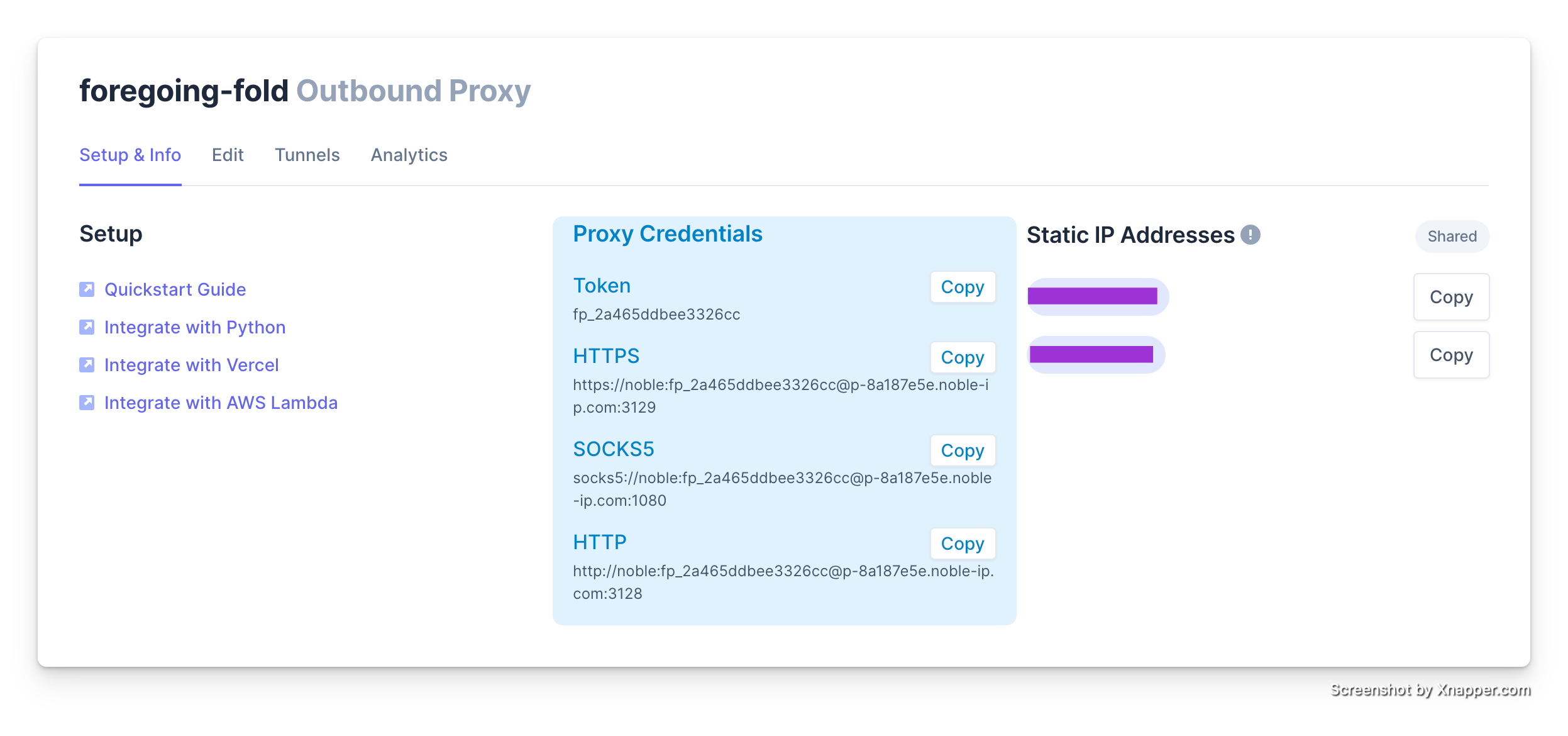
You will first need your Proxy Credentials so make sure you can find them in the dashboard
Making Proxied TCP Connections
Port Leases
If your software does not natively support SOCKS proxies, one option you have is to leverage Noble Port leases. For example if you wanted to connect to a MongoDB database:
python
from pymongo import MongoClient
import requests

lease = requests.post("https://api.noble-ip.com/v1/leases", json={
    "target_host": "mongodb.mycompany.com",
    "target_port": 27017,
    "proxy_token": 'fp_2a465ddbee3326cc',
}).json()

# Connect to the MongoDB server
client = MongoClient(f"mongodb://{lease.hostname}:{lease.port}/")

# Access a specific database
db = client['mydatabase']
Making Proxied HTTP/HTTPs Requests
if you need to access a service over HTTP via a static IP, you can leverage the HTTPS proxies.
Then you can leverage a HTTP library like requests to make API calls:
python
import requests

proxies = {
  'http': 'https://noble:fp_NOBLETOKEN@p-12345.noble-ip.com:3129',
  'https': 'https://noble:fp_NOBLETOKEN@p-12345.noble-ip.com:3129'
}

response = requests.get('https://example.com', proxies=proxies)
print(response.text)